
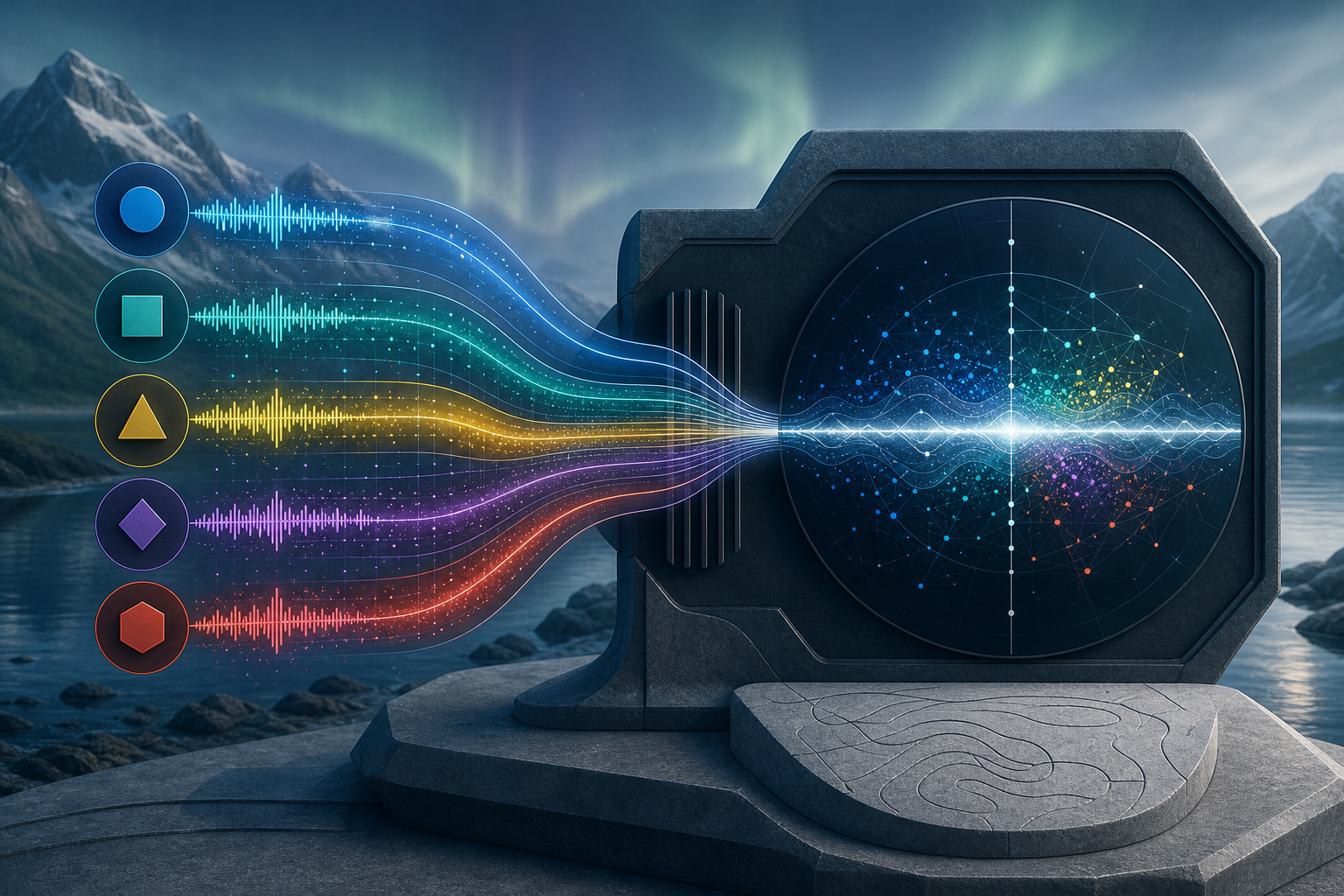
Media Intelligence for Communications Directors Managing Multiple Brands
One platform, every brand, across all Nordic audio
Media intelligence for communications directors managing multiple brands - without the spreadsheets, missed mentions, or manual noise.
See all your brands in one media intelligence view
Consolidate your multi-brand audio monitoring into a single, structured view - book a demo to see how Tonar handles it.
The multi-brand monitoring problem is structural, not just busy
Running brand monitoring across five brands is not the same as running it across one, five times. The challenge is structural: separate keyword lists, separate tools, separate spreadsheets, and a reporting cycle that consumes hours before any insight lands. Mentions slip through because a brand name was mispronounced on a podcast, or because a radio segment aired overnight and nobody caught it. Manual tagging creates inconsistency across brands and across team members.
For communications directors, the real cost is not just time. It is the gap between what actually aired and what made it into the weekly report. Brand monitoring built for single-brand use does not scale to portfolio management without significant manual overhead. That overhead compounds every time a new brand, campaign, or competitor is added to the mix. The tools most teams reach for were not designed with this coordination problem in mind.
Nordic-language AI handles what generic tools miss
Most media intelligence platforms were built on English-language models and extended to other languages as an afterthought. In practice, that means higher error rates on Swedish, Finnish, and Norwegian broadcasts, weaker handling of regional dialects, and entity recognition that fails when a brand name is abbreviated, compounded, or mispronounced in natural speech.
Tonar's transcription models are trained specifically on Nordic languages and real-world broadcasts, reaching a claimed word error rate of 3%. That precision matters most in multi-brand environments, where a single misheard syllable can mean a mention is attributed to the wrong brand or missed entirely. Beyond transcription, Tonar's entity recognition understands context: it correctly identifies brand names, abbreviations, and people even when the audio is ambiguous. For communications directors tracking several portfolio brands with similar-sounding names, this is the difference between reliable data and a report full of false positives.
Share of voice and sentiment work differently at the portfolio level
Share of voice is inherently competitive and relative. A brand can double its media coverage year on year and still lose share of voice if its competitors grew faster. For a communications director managing multiple brands, that calculation has to run in parallel across every brand in the portfolio, each with its own competitive set.
Tonar tracks share of voice across audio and video sources continuously, so the comparison is always current rather than a snapshot from last month's export. Sentiment analysis operates at the entity level, evaluating tone in the context of a specific brand mention rather than flagging positive or negative words anywhere in a segment. That distinction matters when two brands appear in the same broadcast: one praised, one criticized. Topic analysis maps which subjects are being associated with each brand in media conversations, giving communications directors a view of narrative positioning that keyword counts cannot provide. Those layers together turn raw mention data into the kind of PR analytics that can inform an executive briefing.
Structured intelligence reduces noise before it reaches the team
The volume of audio content across Nordic podcasts, radio, and streaming platforms is large enough that unfiltered mention feeds become noise almost immediately. Tonar's Auto-label feature lets users define custom tagging rules in plain language, and the AI applies them automatically to every incoming mention. A communications director can set up distinct label sets for each brand, each campaign, or each client, so the right mentions reach the right people without manual triage.
Natural language search retrieves relevant mentions by intent rather than exact keyword match, which means a search for a brand's reputation around a product launch surfaces contextually relevant segments even when the exact phrase was never used. Users can drill down to listen to the actual audio of any mention directly in the platform, so context is never lost in transcription alone. For agencies preparing monthly reports across multiple clients, this combination of auto-label rules and natural language search replaces a significant portion of the manual work that currently sits between raw monitoring and finished deliverable.
When every brand in your portfolio is monitored in the same place, the question shifts from "did we catch it?" to "what does it mean?"
From setup to insight across all your brands
- 1
Set up brand profiles and competitor sets
Each brand in your portfolio gets its own profile, including the brand name, common abbreviations, key people, and the competitors you want to benchmark against. Tonar's entity recognition handles variations in how names are spoken or abbreviated across different broadcast contexts. This foundation means every subsequent mention is attributed correctly from day one, without manual correction. You can add or adjust profiles as the portfolio changes.
- 2
Define Auto-label rules per brand in plain language
Once profiles are in place, use Auto-label to define custom tagging rules for each brand or client in plain language. Rules can reflect campaign themes, product lines, spokespeople, or any other dimension that matters for reporting. The AI applies those rules automatically to every new mention as it arrives, so incoming content is already structured by the time anyone opens the dashboard. Different label sets for different brands mean each team member or client sees a feed that is relevant to them.
- 3
Tonar monitors and transcribes Nordic audio continuously
Tonar listens continuously across podcasts, radio broadcasts, streaming platforms, and short-form audio and video content across Sweden, Finland, and Norway. Every piece of content is transcribed using AI models trained on Nordic languages and dialects, with a claimed word error rate of 3%. Brand mentions, competitor mentions, and associated topics are identified and structured in real time. Nothing waits for a manual crawl or a nightly batch job.
- 4
Review dashboards, compare share of voice, and export reports
The structured data flows into dashboards where share of voice, sentiment, and topic associations are visible across all brands simultaneously. Communications directors can compare brand performance side by side, drill into individual mentions to hear the original audio, and track how narratives shift over time. For agencies, the same data powers client-ready reports without manual spreadsheet assembly. Teams that need to integrate this data into their own tools can access everything through Tonar's API, including real-time mention feeds, entity data, and sentiment scores.
Benefits
All brands in one structured view
Tonar consolidates monitoring across every brand in your portfolio into a single platform, covering podcasts, radio, streaming, and short-form audio and video across Sweden, Finland, and Norway. No switching between tools or manually merging exports to get a cross-brand picture.
Custom Auto-label rules per brand
Auto-label lets you define tagging logic in plain language for each brand or client independently. The AI applies those rules to every incoming mention automatically, so incoming content is already structured before anyone on the team needs to review it.
Entity-level sentiment, not keyword noise
Sentiment analysis evaluates tone in the context of a specific brand mention, not just the overall segment. When two brands appear in the same broadcast, each gets its own sentiment score, reflecting how it was actually portrayed rather than the segment's general tone.
Continuous share-of-voice comparisons
Share of voice is tracked continuously across all monitored brands and their competitors, so comparisons are always based on current data. Measuring share of voice relative to competitors, rather than in isolation, is what makes the metric actionable for communications strategy.
Nordic-language accuracy that generic tools cannot match
Tonar's AI models are trained specifically on Swedish, Finnish, and Norwegian broadcasts, including regional dialects and real-world audio conditions. A claimed word error rate of 3% means brand mentions are captured and attributed correctly, even when names are mispronounced or abbreviated in natural speech.
How different teams use Tonar across multiple brands
A Nordic conglomerate tracking five portfolio brands
A communications director at a Nordic conglomerate needs to monitor media coverage for five distinct brands simultaneously, each with its own competitive landscape and stakeholder audience. Rather than maintaining separate tools or keyword lists for each, they configure five brand profiles in Tonar with distinct competitor sets and Auto-label rules. Share of voice comparisons across the portfolio are available in a single dashboard view, updated continuously as new audio content is transcribed. When a radio segment mentions two portfolio brands in the same broadcast, entity-level sentiment correctly distinguishes how each was portrayed, rather than applying a single tone to the whole segment. The communications director can produce a consolidated executive briefing that covers all five brands without assembling data from multiple sources.
A PR agency preparing monthly client reports
A PR agency managing media monitoring for several Nordic clients faces a recurring challenge: producing accurate, client-ready share-of-voice reports each month without the manual effort of pulling, tagging, and cross-referencing data from multiple feeds. With Tonar, each client's brand profile and Auto-label rules are configured independently, so the data for each client is already structured and separated before anyone opens a spreadsheet. Natural language search lets account managers retrieve mentions relevant to a specific campaign or news event quickly, even when the exact phrasing varied across broadcasts. The agency can deliver reports grounded in comprehensive Nordic audio coverage, including podcasts and radio segments that text-only monitoring would miss entirely. This is the kind of workflow that PR analytics tools need to support at scale.
A communications team tracking a competitor-heavy product launch
During a major product launch, a communications team needs to know not just how their own brand is being covered, but how competitors are being discussed in the same media conversations. Tonar's topic analysis maps which subjects are associated with each brand across audio content, making it possible to see whether competitors are being linked to the same themes the team is trying to own. Weekly share-of-voice tracking during the launch period provides faster feedback than monthly reporting, allowing the team to adjust messaging if a competitor's narrative is gaining ground. Sentiment at the entity level means the team can distinguish between coverage that mentions both brands and coverage that is substantively about each one. The original audio is accessible for any mention, so context is never lost when a segment is ambiguous.
Common questions about multi-brand media intelligence
Bring all your brands into one media intelligence platform
Managing media intelligence across multiple brands is a coordination problem as much as a data problem. Tonar brings Nordic audio monitoring, entity-level intelligence, and structured reporting into one place, so your team spends less time assembling data and more time acting on it. Book a demo to see how it works with your specific brand portfolio.